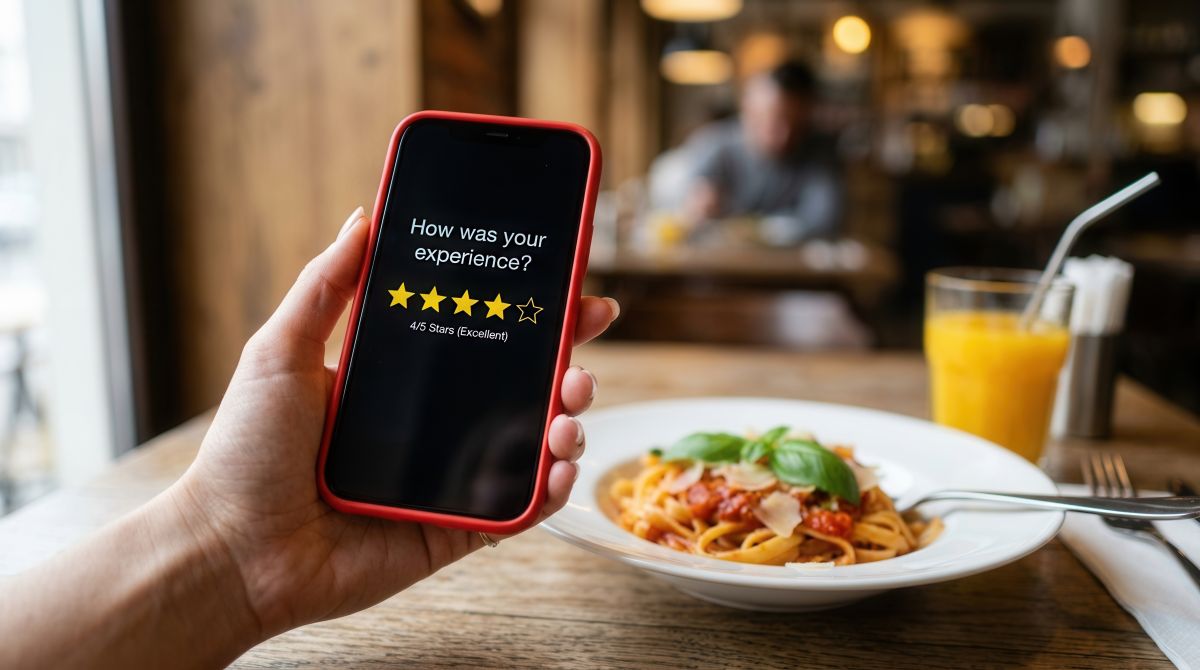
Review scores do their heaviest work in Q4. Holiday diners book differently than everyday diners: they're choosing venues for office parties, family gatherings, and celebration dinners, often in unfamiliar neighborhoods, often on behalf of a group. That decision is high-stakes and low-information, so they lean hard on ratings.
Which means the rating you carry into November was largely determined by the service you delivered in September and October. Reviews are a lagging indicator. By the time your score reflects your holiday performance, the season is over.
That's the opportunity in front of you right now. There's a window before peak where operational improvements still have time to show up in your public rating, and the work required is mostly operational, not promotional. At The Gilkey Restaurant Consulting Group, we consistently find that restaurants trying to fix their reviews with marketing are treating a symptom while the cause runs untouched.
Reviews Are an Operations Output, Not a Marketing Input
This is the framing that changes results.
A restaurant with a mediocre rating almost never has a review problem. It has a consistency problem, a service problem, a pacing problem, or a value-perception problem that reviews are accurately reporting. Review generation campaigns applied on top of unresolved operational issues generate more reviews of the same experience, which moves your score toward your true mean faster, not upward.
So the sequence is: diagnose, fix, then amplify. In that order. Amplifying first is how restaurants end up with more one-star reviews than they started with.
Diagnose What's Actually Driving Your Rating
Read your last six months of reviews as data, not as feedback.
Categorize every negative review. Sort by root cause: wait time, food quality, food temperature, service attentiveness, pacing, noise, cleanliness, value perception, reservation handling, staff attitude. Count them. The distribution will surprise you: most operators believe their problem is food when the data says it's pacing or a specific service touchpoint.
Look for time and shift patterns. Filter negatives by date and time. Complaints clustering on Friday and Saturday dinner point to a volume-capacity problem. Complaints clustering on Sunday brunch point to a specific team or a specific station. This is often the single most actionable cut of the data.
Read your three-star reviews most carefully. One-star reviews are frequently about an unrecoverable incident or an unreasonable guest. Three-star reviews come from people who wanted to like you and found something specific wrong. They're the most diagnostically honest content you have.
Compare your language to your competitors'. What do guests praise about nearby restaurants that they don't mention about you? That gap is often your positioning problem, not your execution problem.
Track your response rate and time. Unresponded negative reviews compound. Prospective guests read the absence of a response as indifference.
This categorization exercise typically takes two to three hours and produces a clearer improvement roadmap than most formal guest surveys.
Fix the Operational Causes
Once you know the distribution, fix the top two or three drivers. Some patterns and their usual causes:
Wait time and pacing complaints. Usually kitchen throughput or expo discipline rather than server behavior. Check ticket times by daypart, look for station bottlenecks, and examine whether your menu has items that structurally can't execute at volume. Fall is the right time to remove them.
Inconsistency complaints. "Great last time, disappointing tonight" is the most damaging review pattern there is, because it destroys the confidence a booking decision requires. The cause is almost always missing or unenforced standards, recipe specs, plating guides, portioning discipline. Consistency is a systems problem, and it's the core of what structured operations consulting is meant to solve.
Service attentiveness complaints. Check section sizes and staffing against actual volume before assuming it's an individual performance issue. A server with too many tables produces attentiveness complaints regardless of skill.
Value perception complaints. Rarely about absolute price. They're about the gap between price and delivered experience, portion, plating, atmosphere, service polish. You can close that gap by raising the experience rather than lowering the price.
Atmosphere complaints. Noise, lighting, temperature, and seating comfort generate more negative sentiment than most operators expect, and they're frequently the cheapest things to fix. Our piece on how atmosphere impacts restaurants covers the levers in detail.
Reservation and greeting complaints. The first ninety seconds set the frame for the entire meal. A disorganized host stand produces reviews about food that was actually fine.
Formal quality assurance processes, structured audits, mystery shopping, standards verification, exist to catch these gaps before guests report them publicly. That's the difference between finding your problems internally and finding them in your rating.
Build Review Generation That Doesn't Feel Transactional
Once the experience is genuinely solid, you want volume. More recent reviews dilute old negatives, signal an active business, and improve your position in local search.
Ask at the right moment. The ask should come at genuine satisfaction, after a guest says the meal was great, not reflexively at check drop. Servers who read the moment get dramatically better conversion than those following a script.
Make it frictionless. QR code on the check presenter, a link in the receipt email, a short link in the reservation follow-up. Every additional step loses most of the people who intended to follow through.
Ask everyone, not just happy guests. Selectively soliciting only positive reviews violates the terms of service of major review platforms and, if detected, can result in penalties against your listing. It's also unnecessary; a genuinely good operation generates a favorable distribution without filtering.
Train the ask, don't mandate it. Review quotas produce awkward, transactional requests that guests notice and resent. Teach the skill, model it, and recognize the people who do it well.
Use post-visit email where you have it. If you're capturing guest email through reservations or loyalty, a short thank-you with an easy review link performs well: sent within 24 hours, while the meal is still fresh.
Never offer compensation for reviews. Discounts, free items, or entries into drawings in exchange for reviews violate platform policies and, in the United States, can raise issues under FTC endorsement guidelines. The risk substantially outweighs the benefit.
Reviews and retention are the same underlying asset, which is why review improvement work compounds. Guests who return are guests who write. Our guidance on increasing customer retention is the natural companion to this work.
Respond in a Way That Converts Future Readers
Your responses aren't primarily for the reviewer. They're for the hundreds of prospective guests who'll read the exchange while deciding where to book a holiday dinner.
Respond to negatives within 24 to 48 hours. Speed signals attentiveness. Delay signals the opposite.
Acknowledge specifically. Generic apology templates read as automated and do more harm than no response. Reference the actual issue.
Don't argue, even when you're right. A defensive response makes the restaurant look worse than the original complaint did, and prospective guests read defensiveness as a warning sign about how they'd be treated.
Move the resolution offline. Acknowledge publicly, offer to continue privately. Nobody wants to read a negotiation.
Respond to positive reviews too, briefly. It demonstrates engagement and encourages repeat behavior. Short and specific beats long and effusive.
Assign ownership. One person, checking daily, with a defined tone. Responses written by whoever happens to see them produce an inconsistent voice and missed reviews.
Prepare the Guest Experience for Holiday Conditions Specifically
Holiday service creates failure modes that don't exist the rest of the year. Prepare for those specifically.
Large parties are the primary review risk. They have more people to disappoint, more complex service demands, and generate reviews at a higher rate. Define your large-party protocol now: dedicated server assignments, pre-set courses where appropriate, clear payment procedures, and a manager touch on every large table.
Set expectations at booking. Communicating realistic wait times, parking conditions, and any holiday menu limitations at the reservation stage prevents the surprise that drives negative reviews. Managed expectations are the cheapest guest satisfaction tool available.
Protect your pacing. The most common holiday complaint is a meal that felt rushed. Under volume pressure, tables get turned aggressively and guests feel it. Decide in advance where your line is, and hold it, a rushed celebration dinner produces a review that outlives the extra turn.
Brief the whole team on the guest mindset. Holiday diners are frequently at a celebration, often with family, sometimes anxious about hosting. The emotional stakes are higher, which means small failures land harder and small kindnesses land harder too.
Staff the host stand properly. It's the highest-leverage position during peak volume and the most commonly under-resourced. Occasion dining puts enormous weight on the arrival experience, a dynamic covered further in our piece on creating a memorable fine dining experience.
Handling Negative Reviews During Peak Season
Some will happen. Volume creates variance.
Recover in the room whenever possible. A problem resolved at the table rarely becomes a public review. Give managers real authority to comp, remake, or otherwise resolve without seeking approval. The cost of a comped entrée is a fraction of the cost of a one-star review during booking season.
Watch for pattern signals, not one-offs. A single complaint about a dish is noise. Three complaints about the same dish in a week is a spec problem.
Don't let one bad night become a narrative. If you have a genuinely rough service, expect several reviews from it. Respond to each individually and specifically. Copy-pasted responses to a cluster of complaints are obvious to readers and make the situation worse.
Keep the team informed without weaponizing reviews. Sharing reviews as a coaching tool works. Using them to publicly single out individuals damages morale precisely when you need it most.
A Six-Week Pre-Holiday Guest Experience Plan
Weeks 1 and 2: Diagnose
- Categorize six months of reviews by root cause
- Identify time and shift patterns
- Audit response rate and backfill unanswered reviews
- Verify listing accuracy across platforms, hours, holiday hours, menu, photos, contact details
Weeks 3 and 4: Fix
- Address the top two operational drivers identified
- Recheck ticket times and section sizing against actual volume
- Refresh standards and specs on the items generating complaints
- Define and train the large-party protocol
Weeks 5 and 6: Amplify
- Roll out the review ask with proper training
- Deploy frictionless review links across touchpoints
- Establish daily response ownership
- Brief the team on holiday guest expectations and pacing standards
Six weeks is enough time for genuine change to appear in your rating before peak booking.
Limits and Boundaries Worth Naming
You cannot remove legitimate negative reviews. Platforms will remove content that violates their policies- spam, off-topic, clear fabrication- but a real guest's honest negative experience stays up. Time and volume are the remedies.
Review gating is prohibited. Screening guests to route only satisfied ones toward public reviews violates major platform policies. It's also a poor strategy: it delays your understanding of real problems.
Purchased reviews are a serious risk. Beyond platform enforcement, they raise legal exposure under FTC rules on deceptive endorsements. The downside is severe and the practice is more detectable than sellers claim.
Rating movement is slow and mathematical. A restaurant with several hundred existing reviews moves its average slowly regardless of how good recent service is. Set expectations accordingly and measure your recent-review trend, not just the headline number.
Some negative reviews are not actionable. A guest upset about a policy you're not going to change is not a signal to change it. Respond professionally and move on.
Restaurant Review Improvement FAQ
How long does it take to improve a restaurant's rating?
Typically six to twelve weeks for meaningful movement, depending on your total review count and how many new reviews you generate. Restaurants with large review histories move slowly; newer listings shift faster.
Should restaurants ask guests to leave reviews?
Yes, and it's permitted by major platforms as long as you ask all guests rather than selectively soliciting satisfied ones. The ask should be timed to genuine satisfaction and made as frictionless as possible.
Is it acceptable to offer a discount in exchange for a review?
No. Incentivized reviews violate the policies of major review platforms and can raise issues under FTC endorsement guidance. The reputational and enforcement risk far exceeds any benefit.
How should a restaurant respond to an unfair negative review?
Professionally, briefly, without arguing. Acknowledge the guest's experience, state your standard, and offer to discuss it directly. Prospective guests judge the response more than the complaint.
What generates the most negative restaurant reviews?
In our experience across client operations, service pacing and inconsistency generate more negative sentiment than food quality alone. Guests forgive a dish they didn't love far more readily than they forgive feeling ignored or rushed.
Do online reviews actually affect restaurant bookings?
Yes, particularly for occasion and group dining where the person booking is deciding on behalf of others and often has no personal experience with the venue. That decision context is exactly what dominates Q4.
Getting Your Rating Ready for Q4
Improving reviews before the holidays is mostly operational work with a communications layer on top. Diagnose honestly, fix the two or three things actually driving complaints, then build a consistent, compliant system for generating and responding to reviews.
Do it in September and October and your rating reflects the improvement by the time holiday bookings peak. Start in December and you're documenting your problems in public.
If you want an outside assessment of what your reviews are really telling you, and an operational plan to fix it before peak season, contact our team. We work with restaurants across the western United States on guest experience, service standards, and operational consistency.