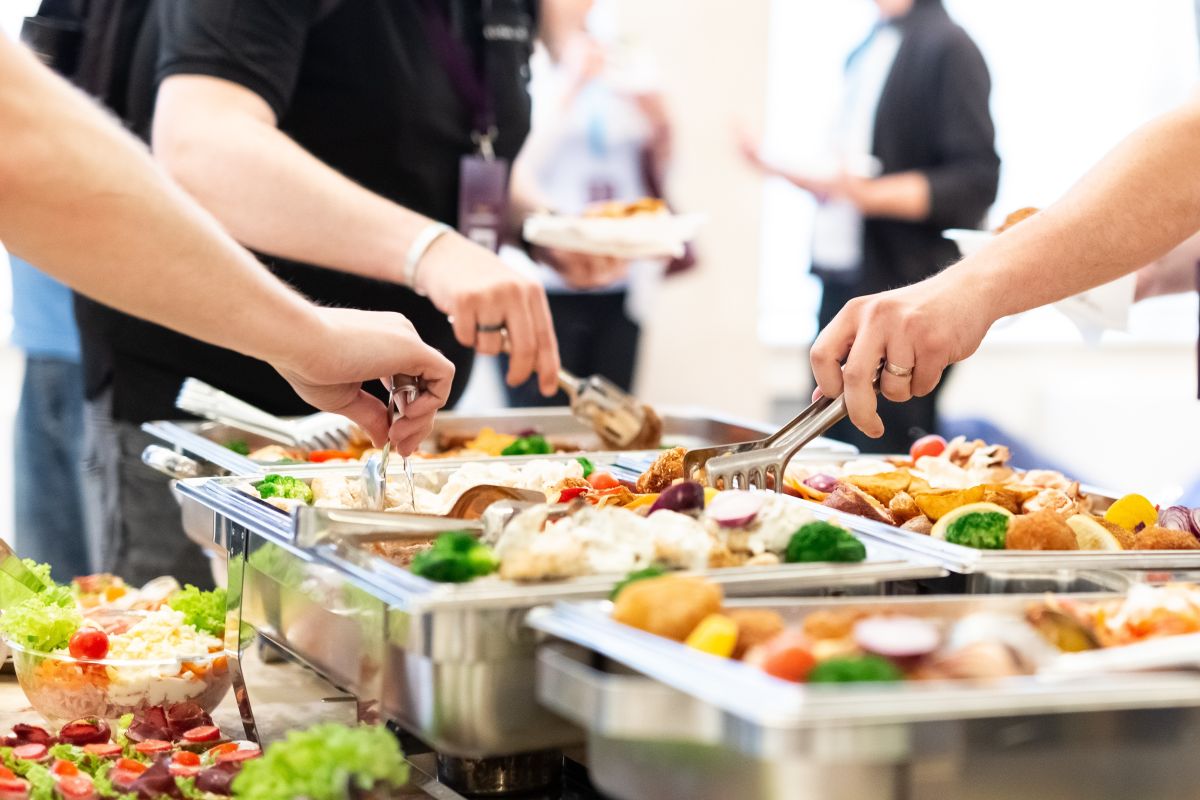
Corporate holiday catering is one of the few Q4 revenue lines that doesn't require another cover in your dining room. It uses kitchen capacity you already have, often during dayparts you're underutilizing, at contribution margins that generally exceed à la carte service, and it's guaranteed revenue, contracted in advance, with a deposit.
Most independent restaurants leave it largely untouched. Not because they can't execute, but because the sales cycle starts before they're thinking about the holidays. Corporate buyers finalize December plans in September and October. If you're building your catering offer in November, the budget is already committed elsewhere.
That's the whole opportunity: it's a timing advantage available to anyone willing to move early. Our team at The Gilkey Restaurant Consulting Group has watched operators add a meaningful Q4 revenue line from a standing start in a single season, mostly by being organized six weeks before their competitors.
Why Corporate Catering Margins Beat Dining Room Margins
The economics are structurally different, and understanding why tells you how to build the offer.
Known counts eliminate waste. You're producing for a confirmed headcount rather than forecasting demand. Purchasing is precise, over-production drops, and the waste line that quietly erodes dining room margin largely disappears.
Limited menus create purchasing leverage. A catering menu of eight to twelve items lets you buy in volume against firm quantities. Your cost per unit improves in ways an à la carte menu with forty SKUs never allows.
Labor per guest is lower. Drop-off catering requires no server, no busser, and no table turn. Even full-service catering typically runs a leaner ratio than dining room service because the service model is simplified and choreographed.
Fixed overhead is already covered. Rent, insurance, and management salaries are paid by your dining room. Catering revenue absorbs relatively little incremental fixed cost, which means more of each dollar reaches the bottom line.
Cash arrives before delivery. Deposits improve Q4 cash flow at the exact moment inventory and labor costs are peaking.
It uses idle capacity. Corporate lunch catering runs during hours your kitchen is often underutilized. That's the cleanest form of margin available, revenue against capacity you're already paying for.
The tradeoff is real: catering adds operational complexity, and a badly run catering program can damage the restaurant service that funds it. We'll get to that.
Decide Which Catering Model Fits Your Operation
Not every restaurant should offer every model. Choose deliberately based on your kitchen, your staff, and your equipment.
Drop-off catering
Food delivered in disposable or returnable containers, no on-site staff. Lowest complexity, lowest price point, highest volume potential. Works for essentially any kitchen. The dominant format for corporate lunches and office gatherings, and the right starting point for most restaurants adding catering for the first time.
Full-service off-site catering
Staff, setup, service, and breakdown at the client's location. Highest revenue per event and highest complexity: you need transport equipment, holding capability, trained staff willing to work off-site, and event-specific insurance. Don't start here.
On-site private events
Buyouts, private dining rooms, or semi-private sections in your own restaurant. Best margin of the three because you use existing equipment, existing staff, and existing infrastructure. Also the easiest to execute well. If you have any private or semi-private space, this should be your first priority, and if you don't, consider whether a section can be temporarily configured for it. Restaurants that treat private events as a formal product rather than an occasional accommodation almost always find the space was available.
Hybrid
Drop-off for lunches, on-site for dinners. This is where most successful independent programs land: high-frequency low-touch daytime business plus high-value evening events.
Choose one or two. Restaurants that launch with all three in a single season generally execute all of them poorly.
Build Packages That Sell, Not a Menu That Confuses
The most common catering mistake is handing a corporate buyer your entire restaurant menu and asking what they'd like.
Corporate buyers are not chefs. They're an office manager, an executive assistant, or an HR coordinator handling this on top of their actual job. They want to make a decision quickly and be confident it will go well. Choice is friction.
Offer three tiers. A good, better, best structure with clear per-person pricing. Most buyers select the middle option, which is where you should place your best margin.
Price per person, all in. Include everything: food, disposables, utensils, setup, delivery within your zone. Buyers submitting for reimbursement need one number they can defend, not a line-item estimate that grows.
Set minimums that protect you. A per-person minimum and a total order minimum. Small orders consume the same coordination time as large ones and destroy the margin advantage.
Build for holding, not for plating. Catering menus require dishes that survive thirty to ninety minutes of transport and holding. Delicate items, anything that wilts, anything relying on temperature contrast, and anything that separates will fail. Test every catering item under realistic hold conditions before it goes on the sheet.
Handle dietary needs in the package structure. Every corporate group has vegetarian, vegan, gluten-free, and allergy requirements. Build them into each tier with a defined count rather than treating them as custom modifications. This is a purchasing decision for the buyer, a package that visibly accommodates their whole team wins over one that doesn't.
Include the signature item. Your catering menu is a sampling of your restaurant for a room full of people who may never have visited. Make sure the thing you're known for is on it. That's how catering becomes a customer acquisition channel rather than just a revenue line, a dynamic explored further in our piece on creating a signature menu item that drives customer loyalty.
Price for Profit, Not for Comparison
Catering pricing gets anchored to the wrong reference point. Buyers compare you to other caterers, not to your dining room, so pricing your catering off your menu prices leaves money on the table in one direction and creates unprofitable work in the other.
Cost the full delivered event. Food, disposables, transport, coordination time, delivery labor, and setup. Coordination time is the one operators systematically ignore, and on complex orders it's substantial.
Target a contribution margin, then set the price. Work backward from the profit you need rather than forward from a food cost percentage.
Charge for delivery outside your zone. Define a radius included in your pricing and a clear fee structure beyond it. Distant deliveries eat labor and vehicle time that nobody accounted for.
Require deposits. A meaningful deposit at booking, balance due on or before delivery. This protects you against late cancellation and improves cash flow when you need it most.
Have a written cancellation policy tiered by notice. Full refund beyond a defined window, partial within it, non-refundable inside your purchasing lead time. Corporate clients expect this and won't object, but it has to exist in writing before the first booking.
Don't discount to win volume. Corporate holiday buyers are typically less price-sensitive than they appear. They're spending a budget, and the primary risk they're managing is that the event goes badly and reflects on them. Reliability and confidence sell better than a lower per-person rate.
That last point is the most important one in this section. Understanding what the buyer is actually optimizing for changes how you sell.
Winning the Corporate Buyer
Identify who actually books. Office managers, executive assistants, HR and people-operations coordinators, and marketing event staff. In smaller companies, it's often whoever's most organized. These are the people to reach, not the CEO.
Start outreach in September. Budgets get allocated and venues get chosen in Q3 and early Q4. Reaching a buyer in mid-November means competing for a decision that's already made.
Make the buyer's job easy. A single-page PDF with three packages, clear pricing, minimums, lead times, and a direct contact. Not a link to a general menu. Not a request to call and discuss. The easier you are to buy from, the more you'll sell.
Mine your existing guest data. Your regulars work somewhere. A table tent, a check insert, or a short email to your list asking who handles their office holiday party is often the highest-yield channel you have, and it costs nothing. Our overview of in-house promotions for your restaurant covers how to run these touchpoints without cheapening the guest experience.
Target proximity first. Corporate buyers strongly prefer nearby vendors for reliability reasons. Office buildings, co-working spaces, medical and professional offices, and business parks within a short radius are your highest-probability prospects.
Respond immediately. Corporate catering inquiries frequently go to several vendors at once, and the first substantive response often wins. A same-day reply beats a better proposal sent three days later.
Ask for the repeat at delivery. The best moment to book January and Q1 business is when the December event just went well. Have the conversation on-site.
Operational Logistics That Protect Your Restaurant
This is where catering programs succeed or destroy themselves. Catering revenue is worthless if it degrades the dining room service paying your rent.
Set hard capacity limits per day. Decide how many catering covers your kitchen can produce alongside normal service, and stop taking orders at that number. Turning away business is a discipline, not a failure.
Establish firm lead times and enforce them. Seventy-two hours for standard orders, longer for large or complex ones. Same-day accommodations feel like good service and reliably compromise both the catering order and that night's dinner service.
Separate catering production physically and temporally. Dedicated prep windows before service, ideally a dedicated station. Catering prep competing with dinner mise en place produces two failures instead of one.
Assign a single owner. One person responsible for inquiries, quotes, confirmations, production sheets, and delivery coordination. Distributed responsibility means dropped details, and in catering a dropped detail is a missing order at a client's holiday party.
Build a written production and delivery checklist. Every order: confirmed count, dietary requirements, delivery address with suite number, contact name and mobile, access instructions, parking or loading details, setup requirements, and equipment return. Missing suite numbers and unreachable contacts cause more failed catering deliveries than kitchen errors do.
Confirm 48 hours out. Counts change. Confirming protects you against producing for a headcount that shrank and against being short for one that grew.
Plan the equipment. Insulated transport carriers, sternos and chafing setups if applicable, serving utensils, labels, a vehicle. Buy or rent this before your first booking, not the morning of.
Label everything, especially allergens. Corporate events have unknown attendees with unknown restrictions. Clear labeling is both a food safety obligation and a professional signal.
The systems discipline underneath all of this is the same discipline that runs a good restaurant, applied to a different delivery model. Structured hospitality management support is often what turns an ad hoc catering effort into a repeatable program.
Partnerships and Channels Worth Developing
Event planners and corporate concierges. They book repeatedly and refer within their networks. One good planner relationship can generate more volume than a season of direct outreach.
Venues without kitchens. Event spaces, galleries, coworking facilities, and small theaters that host corporate parties but can't produce food. A preferred-vendor arrangement is durable, recurring business.
Hotels without full F&B. Select-service properties frequently need catering support for meeting rooms and can't produce it in-house.
Complementary vendors. Bakeries, florists, rental companies, and AV providers work the same events and refer reciprocally. These relationships cost nothing but attention.
Building management. Property managers of multi-tenant office buildings often coordinate tenant events and maintain vendor lists.
Neighboring businesses. The simplest channel and the most overlooked. Walk your immediate radius in September with a package sheet.
Direct outreach and referral partnerships compound over years. A corporate account that books a holiday party well tends to book quarterly lunches, and that's the real prize, Q4 catering is the entry point to year-round revenue, not the whole opportunity. That compounding effect is closely tied to the broader dynamics discussed in how to increase restaurant profits during peak season.
A September-to-November Catering Launch Timeline
September
- Choose your model and define capacity limits
- Build and cost three packages
- Test every item under realistic hold and transport conditions
- Write policies: minimums, lead times, deposits, cancellations, delivery zones
- Produce the one-page sell sheet
- Begin outreach to your existing guest list and immediate radius
October
- Direct outreach to nearby offices, planners, and venues
- Confirm partnership arrangements
- Purchase or rent transport and service equipment
- Train the team on catering production and delivery protocol
- Run at least one internal test order end to end
- Begin taking December bookings with deposits
November
- Push remaining December capacity
- Confirm all bookings 48 hours out
- Finalize daily production schedules against dining room volume
- Prepare January and Q1 follow-up outreach for delivery-day conversations
Where Catering Programs Fail
Overcommitting capacity. The most damaging failure mode. A restaurant that accepts more catering than it can produce alongside service ends up failing both. Set the limit, hold it.
Underpricing coordination. The administrative load of catering, quotes, confirmations, changes, invoicing, is real labor that rarely gets costed. Programs that look profitable on food cost alone often aren't once coordination time is counted honestly.
Menu items that don't travel. Testing under actual hold conditions is not optional. A dish that's excellent at the pass and mediocre after forty-five minutes in a carrier will cost you the account.
No single owner. Distributed responsibility guarantees dropped details, and catering failures are highly visible: they happen in front of an entire company.
Ignoring insurance and licensing. Off-site catering may require additional liability coverage, vehicle coverage, and in some jurisdictions specific permits. Requirements vary by state and locality, particularly for operators running units across multiple western markets. Verify with your insurer and local health authority before your first off-site event rather than after.
Treating it as seasonal. Restaurants that build a catering program for the holidays and abandon it in January leave most of the value unrealized. The relationships you build in Q4 are worth more across the following year than the December revenue itself.
Corporate Catering FAQ
When should restaurants start selling holiday catering?
September. Corporate buyers allocate budgets and select vendors in Q3 and early Q4. By mid-November, most December decisions have already been made.
Is catering more profitable than dining room service?
Contribution margins are generally stronger because counts are known, waste is minimal, labor per guest is lower, and fixed overhead is already covered by the restaurant. That advantage disappears if coordination time is uncosted or capacity is overcommitted.
What's the best catering model for a restaurant starting out?
Drop-off catering and on-site private events. Both use existing capability with minimal added complexity. Full-service off-site catering requires equipment, trained staff, and insurance that most restaurants shouldn't take on in a first season.
How far in advance should catering orders be required?
Seventy-two hours for standard orders, one to two weeks for large or complex events. Enforce it. Same-day accommodations compromise both the catering order and dining room service.
How should restaurants price corporate catering?
Per person, all-inclusive, costed against the full delivered event including coordination and delivery labor, then priced to a target contribution margin. Corporate buyers value reliability over the lowest per-person rate.
Does catering take business away from the dining room?
Not if capacity is managed. Corporate lunch catering typically uses underutilized daytime kitchen capacity, and on-site private events fill space that might otherwise sit empty. The risk is overcommitment, not cannibalization.
Capturing the Q4 Catering Opportunity
Corporate holiday catering rewards preparation more than talent. The restaurants that win it aren't necessarily the best kitchens in the market: they're the ones with a clear package, honest pricing, defined capacity limits, and a sell sheet in a buyer's inbox in early October.
The window is now. Build the offer in September, sell it in October, execute it in December, and convert those relationships into year-round revenue in January.
If you'd like help structuring a catering program that adds margin without compromising your restaurant service, talk to our team. We work with operators across the western United States on revenue development, event operations, and profitability strategy.