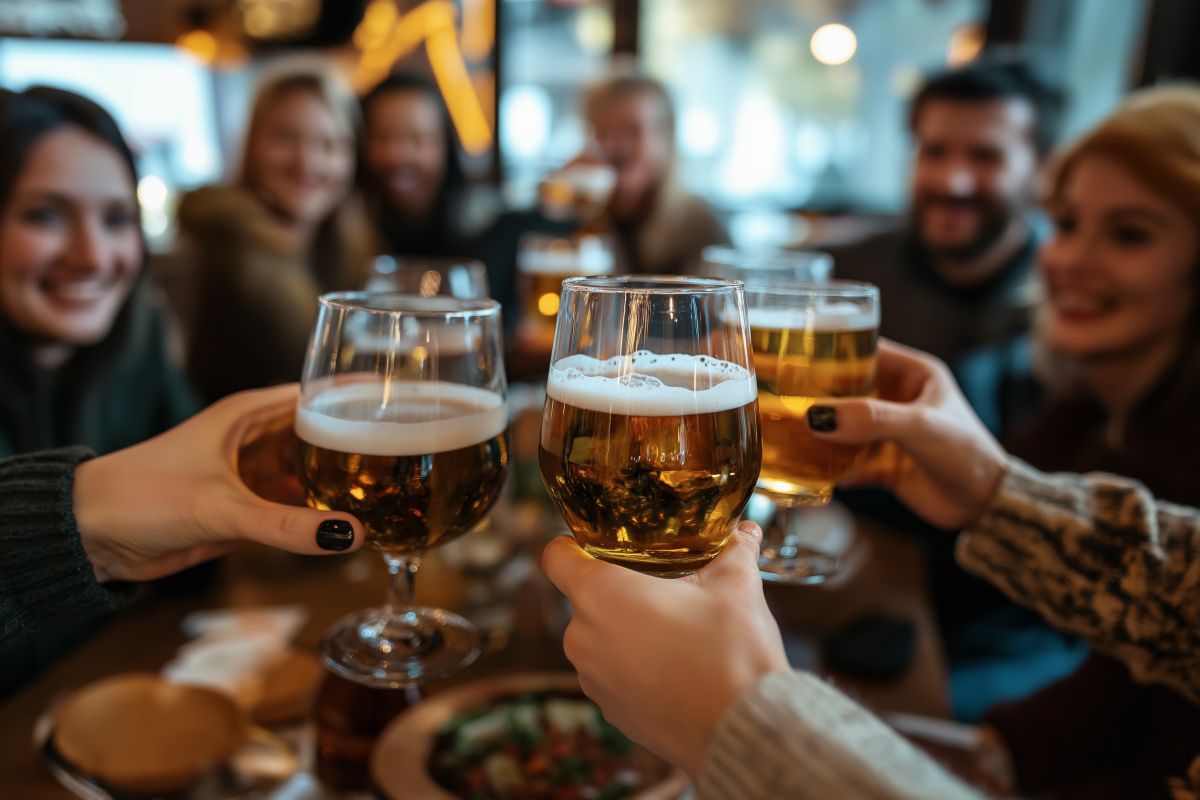
The beverage program is where Q4 margin is won or lost. Pour costs are structurally more favorable than food costs; incremental beverage sales require no additional cover, and holiday guests order differently than everyday guests: more celebratory, more willing to trade up, more likely to have a second round.
Which means the decisions you make about your fall and winter list in October have outsized consequences for the quarter. Get the program right and beverage carries your margin through the season. Get it wrong, too complex to execute at volume, too trend-chasing to feel like your brand, too slow at the well, and the bar becomes the bottleneck that defines every busy night.
At The Gilkey Restaurant Consulting Group, we look at beverage trends through an operational filter first. A trend is only useful if your bar can execute it at 200 covers on a Saturday.
A note on how to read what follows: these are directional observations about movements already visible in the market as of this writing, not predictions. Regional variation across the western states is significant: what's saturated in Los Angeles may be genuinely novel in Boise, and what works in a Scottsdale resort concept won't translate to a Portland neighborhood bar. Read these as a menu of options to evaluate against your own market and guest base, not as a checklist.
How to Read a Trend Before You Commit to It
Before the list itself, the filter. Every trend below should pass four tests before it touches your menu.
Does it fit the concept? A trend adopted because it's trending, rather than because it belongs, reads as inauthentic to regulars and confuses your positioning.
Can it execute at volume? Any drink requiring more than roughly thirty seconds of active bartender time is a liability on a busy night unless the components are pre-batched.
Does the margin work at your price point? Premium ingredients require premium pricing, and your guests have a ceiling. Cost it before you build it.
Does your team have the skill and the interest? A program your bartenders don't understand or care about will be executed indifferently, and guests can tell.
Trends that fail any of these are worth admiring in someone else's bar.
Cocktail Direction Shaping the Season
Agave continues its expansion into cold-weather drinking. Tequila and mezcal have been growing categories for years, and the interesting movement now is their use in stirred, spirit-forward, cold-weather formats rather than the citrus-and-shake templates that drove their initial growth. Mezcal in particular works well in autumn contexts; the smoke reads as warm rather than bright.
Spirit-forward and stirred remains the premium play. Stirred drinks are faster to execute, easier to batch, and command higher prices. For a Q4 program, this is the most operationally sensible category to lead with.
Amaro and bitter aperitifs have moved from insider to accessible. Guests who wouldn't have ordered an amaro five years ago now do. They're useful in fall programs: they carry complexity without heavy sweetness, they work as digestifs at the end of long holiday meals, and margins on the category are typically strong.
Warm cocktails are undersold nearly everywhere. Hot buttered rum, toddies, spiked coffee and chocolate drinks. Most bars offer one, half-heartedly. A properly built warm cocktail section is genuinely differentiating in cold months, particularly for concepts with patios or high-traffic outdoor waiting areas.
Fat-washing, infusions, and clarified drinks continue in cocktail-focused programs. These require real technical capability and lead time, so they belong in bars with dedicated prep capacity, not in a program you're building three weeks before Thanksgiving.
Batching has become a signal of professionalism rather than shortcutting. Guests no longer read pre-batched cocktails as inferior, and operators have stopped apologizing for them. For Q4, aggressive batching is the difference between a bar that flows and one that stalls.
If you're building signature drinks specifically, our guidance on creating a signature cocktail covers the development process in more detail.
The Zero-Proof Category Has Matured
This is the most consequential shift in bar programs over the last several years, and many restaurants still under-serve it.
Non-alcoholic drinking has moved past the sad mocktail and past the novelty phase. Guests abstaining for health, for pregnancy, for religious reasons, because they're driving, because they simply don't want to drink tonight, now expect a real option, and they're willing to pay something close to full cocktail pricing for a well-constructed one.
What matters operationally:
- Build zero-proof drinks with the same rigor as the alcoholic list. Depth, bitterness, acid, and texture, not juice and soda.
- Price them properly. Underpricing signals that the category is an afterthought and leaves substantial margin on the table. A well-built zero-proof cocktail can carry a very strong margin.
- Put them on the main list, not in a footnote. Segregating them makes ordering feel like a concession.
- Non-alcoholic spirits, aperitifs, and beers have improved considerably and are worth evaluating, though quality varies widely by product and category. Taste before you commit.
The holiday season is precisely when this matters most. Office parties and family gatherings contain the highest concentration of non-drinking guests you'll see all year, and those guests are frequently in large groups that generate significant checks.
Wine List Movement
Lighter reds continue gaining share. Gamay, lighter-bodied Pinot Noir, Frappato and similar styles, often served slightly chilled, have been steadily displacing heavier reds as default cold-weather pours in many markets. Worth having representation.
Regional and lesser-known appellations offer better value and better margin. Guests have become more adventurous, and the markup opportunity on well-chosen lesser-known bottles is meaningfully better than on recognizable labels where guests can price-check.
By-the-glass programs are where the real Q4 money is. Group dining and holiday meals drive by-the-glass volume. Preservation systems that let you open better bottles by the glass without loss can materially change your wine margin.
West Coast regional wine remains a genuine differentiator for operators in this footprint. Washington, Oregon, California, Idaho, and Arizona all produce wines with real quality and real stories. For restaurants across the western states, a thoughtful regional section is both a margin opportunity and an authenticity signal that imported-heavy lists can't match.
Whether the wine list lives on the main menu or separately is a structural decision with real revenue consequences, which we've examined in our piece on integrating the wine and beer list into the main menu.
Beer, Cider, and the Low-ABV Middle
Crisp lagers have held their resurgence. The pendulum swing away from high-ABV, heavily hopped beers toward clean, sessionable lagers has been sustained rather than temporary. Have a good one.
Cider is underexploited in fall programs. It's seasonally perfect, naturally gluten-free, and most restaurants carry one mediocre option. A small, well-chosen cider selection differentiates cheaply.
Low-ABV and session options serve a real behavioral shift. Guests increasingly want to drink across a longer evening without escalating intoxication, a pattern especially relevant during holiday events. Low-ABV cocktails and sessionable beers support longer stays and often more total rounds.
Draft line maintenance is a margin issue, not a maintenance issue. Dirty lines cost you in waste, in quality, and in guests who quietly stop ordering draft. Q4 volume makes line cleaning schedules easier to skip and more costly to skip.
Guest Experience Trends Around the Bar Itself
The bar as a dining destination continues to grow. Solo diners, walk-ins, and guests without reservations increasingly prefer to eat at the bar. That requires a bar food menu that's genuinely good rather than a truncated afterthought, and bartenders trained to serve food properly.
Cozy is a design strategy with revenue consequences. Warm lighting, softer materials, and enclosed seating drive longer stays and higher checks in cold months. This connects directly to the broader thinking in our piece on cold weather concepts and cozy guest experiences that convert.
Guests want the story, briefly. Provenance, technique, and a reason the drink exists all raise perceived value: delivered in a sentence, not a lecture. Train the sentence.
Bar seating capacity is frequently under-optimized. In many operations, the bar generates the highest revenue per square foot in the building. It's worth analyzing whether your layout reflects that.
Broader seasonal patterns beyond beverage are covered in our overview of winter restaurant trends emerging nationwide, which is useful context for positioning the bar program within your wider Q4 strategy.
Operational Trends That Make the Above Executable
None of this matters if the bar can't run.
- Batching and pre-prep as standard practice, with defined recipes, labeled containers, and dated shelf lives
- Station design that minimizes movement; a bartender walking to a distant well on every drink is the most common and most fixable throughput problem
- A short, deliberate list. Eight to twelve cocktails execute better than twenty. Guests choose faster, and bartenders execute consistently.
- Barbacks as a real position, not an afterthought. In Q4, a dedicated barback is often worth more throughput than an additional bartender.
- Inventory and pour cost tracking with actual discipline. Over-pouring is the bar equivalent of portioning drift and costs more than most operators believe.
- Server training on the beverage list. The floor sells more beverage than the bar does. A server who can confidently recommend a cocktail or a by-the-glass pour drives attachment rate more effectively than any menu design.
The structural side of this- throughput, pour cost, station design, and program architecture- is the core of what bar consulting work addresses, and it's covered practically in our piece on optimizing bar operations for higher profit margins.
Implementing Before the Holidays Without Destabilizing Service
You have a narrow window. Work in this order.
- Choose two or three changes, not ten. A focused implementation succeeds; a comprehensive one during Q4 fails.
- Cost everything before you build it. Target pour cost, then design to it.
- Test under realistic conditions. Build each new drink at speed, timed, by the bartender who'll actually make it on a Saturday.
- Batch what can be batched and document the recipe so it's reproducible by anyone.
- Train the floor, not just the bar. Servers need to taste the drinks and have one sentence about each.
- Launch by early November. That gives you weeks of refinement before peak. Launching in December means debugging during your highest-volume nights.
Where Trend-Chasing Goes Wrong
Adopting trends that don't fit the concept. A neighborhood pub with a clarified milk punch program is a confused brand, not an elevated one.
Overbuilding the list. More options slow guests down, slow bartenders down, and increase inventory complexity and spoilage.
Ignoring pour cost in pursuit of creativity. Premium and rare ingredients need pricing that supports them. A signature cocktail losing money at volume is a problem that grows with success.
Launching untested during peak. New drinks need refinement under real conditions. December is not the time to discover a build takes ninety seconds.
Neglecting the classics. Most guests order familiar drinks. A program so focused on innovation that the Old Fashioned is inconsistent has its priorities inverted. Execute the classics flawlessly first; the creative list is the differentiator on top of that foundation.
Assuming national trends apply locally. This is the biggest one for operators across a wide geography. Guest sophistication, category familiarity, and price tolerance vary enormously between markets in this region. Test locally before committing.
Fall and Winter Bar Trends FAQ
What cocktail styles work best for restaurants in fall and winter?
Spirit-forward stirred drinks, amaro and bitter aperitifs, agave in warm-weather-neutral formats, and warm cocktails. Stirred drinks in particular are faster to execute and easier to batch, which makes them well suited to high-volume holiday service.
Are non-alcoholic cocktails worth putting on a restaurant menu?
Yes. The category has matured well past novelty; guests expect a genuine option, and well-constructed zero-proof drinks can carry very strong margins when priced appropriately. The holiday season has the highest concentration of non-drinking guests of any period.
How many cocktails should a restaurant's seasonal list include?
Eight to twelve for most full-service operations. Shorter lists execute more consistently, reduce guest decision time, and lower inventory complexity, all of which matter more during peak volume.
When should a restaurant launch its winter beverage program?
Early November. That allows several weeks to refine builds, train the floor, and adjust pricing before peak volume, rather than debugging a new program during your busiest nights.
How can bars increase throughput during the holidays?
Batch aggressively, shorten the list, add a dedicated barback, and audit station layout for unnecessary movement. Station design and batching typically produce larger throughput gains than adding bartenders.
Do national beverage trends apply to every market?
No. Category familiarity and price tolerance vary substantially between markets across the western states. Evaluate any trend against your specific guest base before committing menu space to it.
Building a Bar Program That Carries Q4
The beverage program is the highest-leverage margin decision available to most restaurants heading into the holidays, and the trends worth adopting are the ones that survive an operational filter: they fit your concept, execute at volume, price correctly, and match your team's capability.
Pick two or three. Cost them properly. Launch in early November. Execute the classics flawlessly underneath.
If you'd like help building a beverage program designed for both margin and throughput this season, reach out to our team. We work with restaurants and bars across the western United States on program development, pour cost, and bar operations.