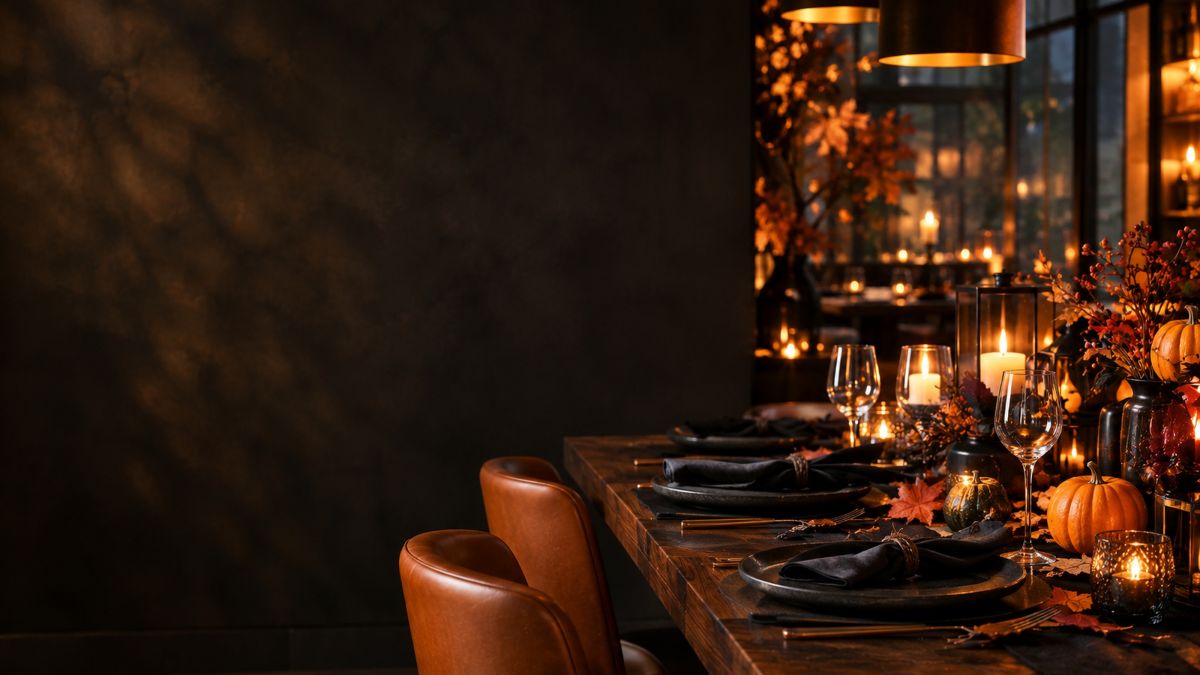
Halloween is the most underrated promotional date on the restaurant calendar. It sits in a slow stretch between summer patio season and the holiday rush; it carries almost no guest expectation of discounting, and it gives you social content that performs without a media budget.
It's also the one major promotional holiday where guests want to participate rather than just be served. That distinction matters more than any tactic in this article. Valentine's Day asks you to deliver a romantic experience. New Year's Eve asks you to deliver a party. Halloween lets your guests bring something- a costume, a group, an idea of a night out- and rewards you for building a stage for it.
The restaurants that win in October understand that. The ones that don't put a pumpkin at the host stand wonder why nothing happened. Our team at The Gilkey Restaurant Consulting Group works with operators on seasonal revenue strategy every year, and the gap between those two approaches is almost entirely about planning, not budget.
What Makes a Halloween Promotion Actually Work
Three things separate promotions that move revenue from promotions that just create work.
They give people a reason to gather, not a reason to save. Halloween traffic is group traffic. Friends coordinating a night out, parents looking for something after trick-or-treating, coworkers extending an office party. Build for parties of four to eight, and you're building for the actual demand.
They create a photograph. Not because social media is the point, but because a photographed restaurant is a recommended restaurant. If nothing in your space is worth capturing, your promotion ends when the guest leaves.
They protect margin. This is where most seasonal promotions fail. Halloween does not require discounting, and discounting on Halloween is actively counterproductive: you're competing for a night when people have already decided to go out and are willing to spend. The same principle applies here as in our approach to promotions restaurants can execute without discounting: add perceived value, don't subtract price.
Everything below is built on those three ideas.
Promotions That Drive Reservations, Not Just Walk-Ins
Walk-in traffic is unpredictable and hard to staff for. Reservations let you forecast, prep, and schedule. Design your promotions to require a booking.
Themed prix fixe for the week, not just the night. Halloween falls on a Saturday in 2026, which is the strongest possible draw, but it also means the entire preceding week is available. A three-course seasonal menu running October 26 through 31 spreads demand across your slowest weeknights rather than concentrating it on the one night you'd have filled anyway.
Costume party with a booking requirement. Reserved seating, a defined start time, and a contest with a real prize. The prize should be worth winning: a dinner for four, a private event credit, a bar tab, because a meaningful prize is what makes people actually commit to a costume and bring friends.
Group packages for the office crowd. Halloween is increasingly a workplace social occasion. A per-person package for parties of eight or more, bookable in advance, captures spend from groups that would otherwise scatter.
Family-friendly early service. If your concept supports it, the 4:00 to 6:30 window on Halloween night is genuinely underserved. Parents want to feed kids before or after trick-or-treating, and almost nobody is competing for that daypart. A simple kids' offer plus a fast, reliable adult menu can fill a period that's normally dead.
Day-of-the-Dead programming where it fits your concept. For restaurants with Mexican or Latin American concepts, November 1 and 2 offer culturally grounded programming that extends the season. This should be done with genuine respect and, ideally, actual connection to the tradition; a superficial appropriation of Día de los Muertos aesthetics reads as hollow and can generate real backlash. If it isn't authentic to your concept or your team, don't reach for it.
Late-night after-party positioning. Halloween generates displaced demand: people leaving parties, coming from events, looking for somewhere to land at 10:00 PM. A limited late menu and an extended bar can capture volume most kitchens have already given up on.
Bar and Beverage Programs Built for October
Beverage is where Halloween margin lives. Pour costs are favorable, the creative latitude is enormous, and cocktails photograph better than almost anything on your food menu.
Build three to five themed drinks, not fifteen. A tight list executes cleanly under volume and is easier for servers to sell. Fifteen themed cocktails on Halloween night means slow tickets and inconsistent drinks.
Design for visual impact using technique, not gimmicks. Layered colors, dramatic garnish, smoke from a torched herb, glassware choice, a blackened rim. What you want to avoid is anything that requires per-drink theater from an already-slammed bartender, and anything involving dry ice: that's a genuine safety concern, since dry ice can cause serious injury if ingested and requires specific handling protocols. Plenty of operators use it safely, but if you do, it needs trained staff and a defined procedure, not improvisation on the busiest night of the month.
Name them well. The name does more merchandising work than the description. Specific and clever outperforms generic and spooky.
Batch everything you can. Pre-batched cocktail bases are the single biggest driver of bar throughput on a high-volume themed night. Build the batch, test it, and let bartenders finish and garnish rather than build from scratch.
Give non-drinkers a real option. A thoughtfully constructed zero-proof cocktail at a proper price is now expected, not optional, and Halloween's visual-forward drinks translate perfectly to zero-proof.
Extend to wine and beer. Seasonal reds, spiced ciders, and pumpkin or amber styles carry the theme without requiring bar labor. If your list is integrated into your main menu, this is easy to merchandise, a structural question we cover in our look at whether the wine and beer list belongs on the main menu.
For concept and recipe direction specifically, our roundup of fall and Halloween-inspired cocktails is a practical starting point.
Designing for Social Sharing Without Gimmicks
Social visibility follows from physical design decisions, not from asking people to post.
Build one deliberate photo moment. A single well-executed installation, a decorated entryway, a dramatic bar backdrop, a themed corner, outperforms décor scattered evenly through the room. Concentrate the budget.
Light it properly. This is the mistake almost everyone makes. Halloween décor is usually dark, and dark rooms photograph badly. Your photo moment needs light that flatters faces. Warm, directional, and bright enough for a phone camera without a flash. If guests have to use flash, they won't post the picture.
Make the drinks the content. A visually striking cocktail generates more organic posts than any installation, because guests photograph what's in front of them.
Put the handle in the physical space. Small, tasteful signage at the photo moment. Not table tents on every surface.
Run a contest with a real mechanic. "Post a photo, tag us, best costume wins" works when the prize is worth it, and the judging is transparent. Announce the winner publicly and promptly, a contest with no visible resolution damages trust.
Repost guest content aggressively. Guest photos are the highest-performing content you'll get; they cost nothing, and reposting them makes people more likely to post again next year. Ask permission, then share.
Capture your own content early. Photograph the drinks and the décor on a quiet afternoon before opening, not during service. Content shot in chaos looks like it.
Costume, Décor, and Atmosphere Decisions Worth the Money
Staff costumes are worth it if they're coordinated. A unified team theme reads as intentional and professional. Individually chosen costumes read as inconsistent and can create service and hygiene problems. Set clear rules: nothing that impedes movement, nothing that violates health code, nothing that obscures the face during service, closed-toe shoes in the kitchen.
Spend on lighting before décor. Colored gels, warmer bulbs, and a few well-placed accent lights transform a room more effectively than a large volume of props. Atmosphere is largely a lighting problem, as we've written about in more depth regarding perfecting lighting for your restaurant.
Keep the dining experience functional. Fog machines interfere with fire detection systems in many buildings and can trigger alarms. Loud sound effects on a loop exhaust staff over a full shift. Décor that blocks service paths creates real safety issues on a high-volume night. Theme the room without compromising how it works.
Don't obscure the food. Dramatic lighting that makes plates look grey is a bad trade. Keep table-level light honest.
Decorate the exterior. The most cost-effective decoration is the one that pulls people off the sidewalk. Your entry, windows, and any patio frontage do more traffic work than anything inside.
Marketing Timeline: Four Weeks Out to Night-Of
Four weeks out
- Lock the concept, menu, and any ticketed or reservation-required events
- Cost the themed items and set pricing
- Shoot content: cocktails, food, décor mockups
- Open reservations and announce
Three weeks out
- Begin consistent social posting with the shot content
- Email your list with the booking link
- Brief the front of house on what's happening and how to sell it
- Confirm any partnerships or local cross-promotion
Two weeks out
- Push reservations hard; highlight remaining availability
- Local outreach: neighborhood groups, community calendars, nearby businesses
- Confirm staffing and finalize the schedule
- Order décor, glassware, and any specialty product with lead time
One week out
- Final reservation push emphasizing scarcity if it's genuine
- Install décor
- Run a bar test: batch the cocktails, time the builds, adjust
- Pre-shift training on the themed menu and the contest mechanics
Night of
- Assign one person to capture content, not a working server
- Announce contest results publicly and on time
- Convert: talk to every large party about holiday bookings while they're in the building
That last point is the highest-value thing you'll do all night. You have a room full of groups who just chose you for an occasion. Their office holiday party is not yet booked.
Measuring Whether It Worked
Set the measurement up before the promotion, not after.
- Compare versus the same period last year, and versus a normal comparable week
- Average check: a themed promotion should raise it, not lower it
- Beverage attachment rate and beverage as a percentage of total sales
- Reservation volume and party size distribution
- New guest count if you have loyalty or reservation data to identify it
- Holiday bookings generated on the night, which is often the real return
- Social reach and saves, weighted toward saves and shares rather than likes
The metric that matters most is the last commercial one: how many Q4 private events and catering conversations started because someone was in your dining room on Halloween. That's the compounding return.
What to Avoid
Discounting. Halloween demand doesn't need a price incentive, and discounting trains guests to wait for one.
Over-theming the food. Guests want a good meal in a themed room, not novelty food. Seasonal ingredients and one or two playful items, not a menu of gimmicks.
Understaffing the bar. Themed cocktails take longer than standard pours. If you build a drink program and staff it normally, you'll create a bottleneck that defines the night.
Ignoring your regulars. Some guests come on October 31 because it's Saturday and they want dinner. A room so committed to the theme that normal service becomes impossible costs you the base you rely on all year.
Announcing too late. Two weeks is not enough. Halloween plans get made three to four weeks out, and you need to be in the consideration set before that.
Letting the theme override the brand. Your Halloween programming should still look like your restaurant. A concept that abandons its identity for a night confuses guests about what you actually are, which is the opposite of what good brand development work is meant to achieve.
Halloween Restaurant Promotion FAQ
How far in advance should restaurants plan Halloween promotions?
Four weeks minimum for planning and marketing. Guests make Halloween plans three to four weeks out, so announcements that go live in mid-October are already competing for decisions that have been made.
Do Halloween promotions require discounting?
No, and discounting generally hurts. Halloween is a high-intent occasion where guests are already prepared to spend. Add perceived value through experience, themed items, and programming rather than reducing price.
What kind of Halloween promotion works best for restaurants?
Anything that drives bookings from groups. Themed prix fixe menus running the full week, reservation-required costume events, and group packages for office parties all outperform undifferentiated walk-in promotions.
Is Halloween worth it for family restaurants?
Often more than for bars. The 4:00 to 6:30 window on Halloween night is underserved; parents need to feed children around trick-or-treating, and very few restaurants compete for it.
How many themed cocktails should a bar offer?
Three to five. A short list executes faster, stays consistent under volume, and is easier for servers to recommend. Batch the bases in advance and let bartenders finish and garnish.
What's the biggest return from Halloween programming?
Frequently not the night itself. It's the Q4 private event and catering business you book by talking to the large groups sitting in your dining room.
Making October Count
Halloween rewards preparation and creativity more than spend. A tight themed menu, three well-designed cocktails, one properly lit photo moment, a reservation-driving offer, and a four-week marketing runway will outperform a much larger budget deployed two weeks out.
And the night has a second job: it puts groups in your building six weeks before they book their holiday parties. Use it.
If you'd like help building seasonal programming that drives traffic without eroding margin, or a beverage program designed to carry you through Q4, get in touch with our team. We work with restaurants and bars across the western United States on promotions, concept, and revenue strategy.